
苏绣 · Su Xiu · Suzhou Embroidery
Su Embroidery | Tang Heritage Curation
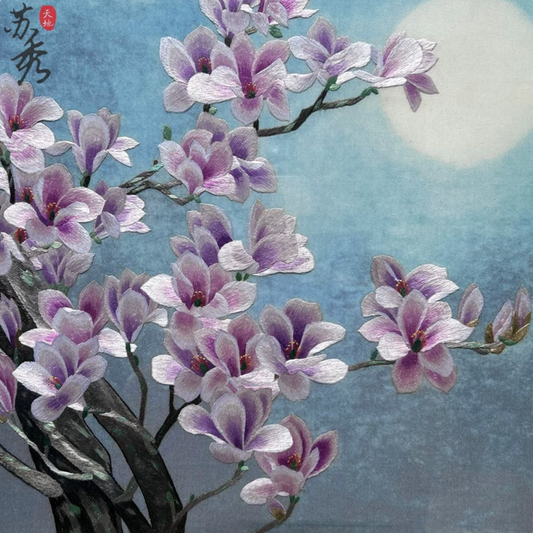
Su Xiu — Suzhou silk embroidery — is 2,500 years old. It is one of the four great embroidery traditions of China, and by most accounts the most technically refined of them all. Silk threads are split to a fraction of their original width. Images appear on both sides of a single piece of fabric, without a knot or a loose end. Fur, water, moonlight, and the iridescent wing of a kingfisher are rendered in thread with a precision that makes guests stop mid-sentence and reach out to check whether what they are looking at is embroidered or photographed.
Tang Heritage works directly with independent artisans in Suzhou who have spent decades mastering this craft. Every piece in this collection was made by hand, stitch by stitch, by one of them. We do not press them for volume. We do not replicate. What they make, we offer. When it is gone, we wait.

The Craft
What separates Su Embroidery from everything else
A standard silk thread contains sixteen filaments. In Su Xiu, artisans split that thread down to four, sometimes fewer; producing a filament so fine it can barely be held between the fingers. It is with this thread, and no other, that the gradients of a peony petal or the luminosity of a full moon are built, one stitch at a time.
The double-sided technique takes the tradition further still. A single piece of silk, worked simultaneously on both faces, produces two identical images with no knots, no thread ends, and no visible difference between front and back. It is not simply a technical feat. It is a philosophical one: perfection that cannot be seen from the outside.
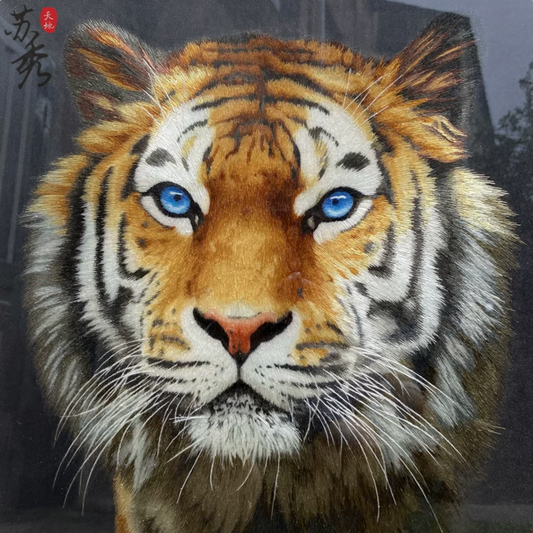
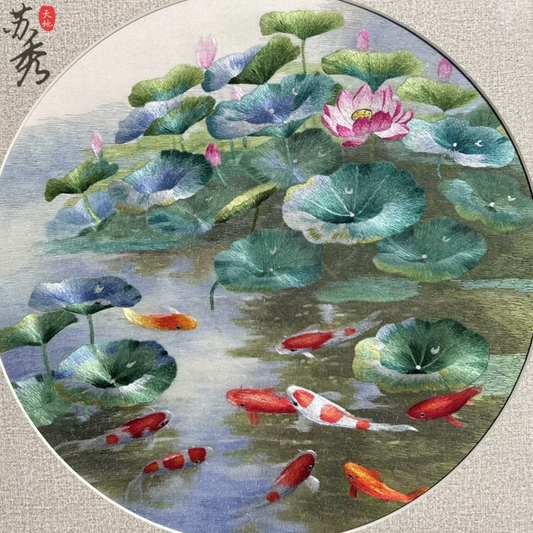
Cat fur. Koi scales. Tiger eyes. Moonlight on water. These are the subjects Su Xiu has always chosen to test itself against. The subjects that least forgive approximation, and most reward the artisan who will not accept it.
-
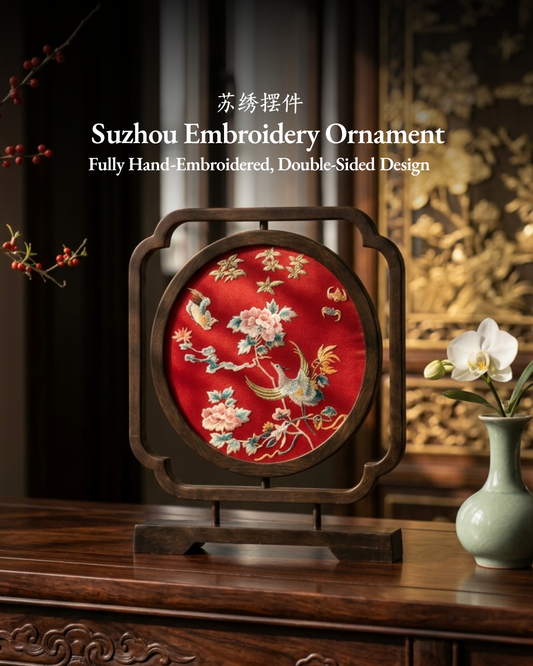
Su Embroidery Wood Ornament (Two Designs, Double-Sided)
Regular price $350.00 USDRegular priceUnit price per -
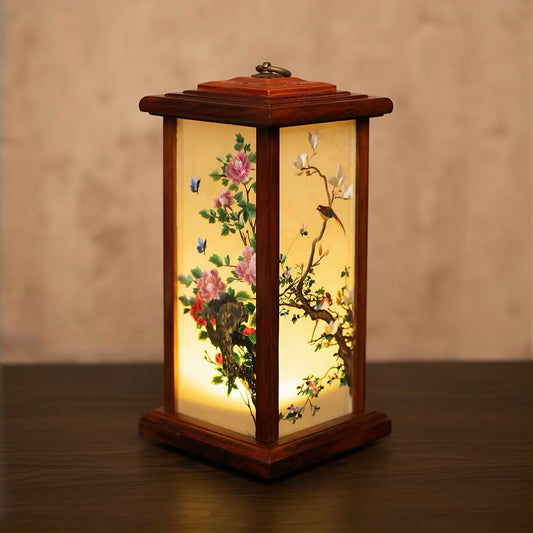
Su Embroidery Palace Silk Lamp
Regular price $420.00 USDRegular priceUnit price per -
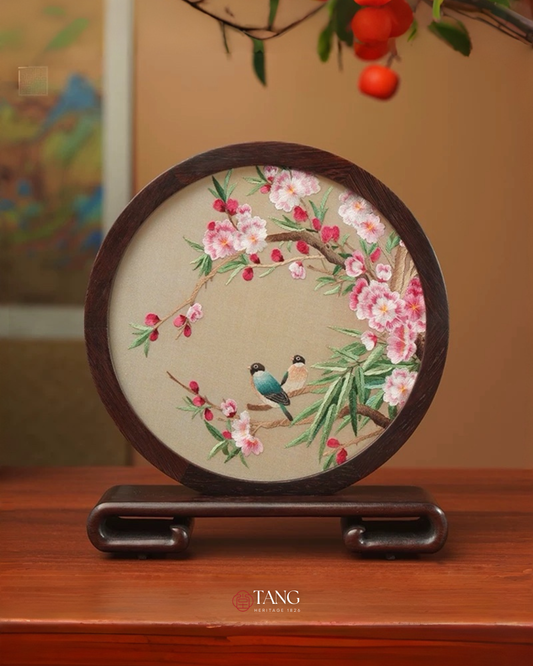
Su Embroidery Wood Ornament (One Design, Double-Sided)
Regular price $350.00 USDRegular priceUnit price per -
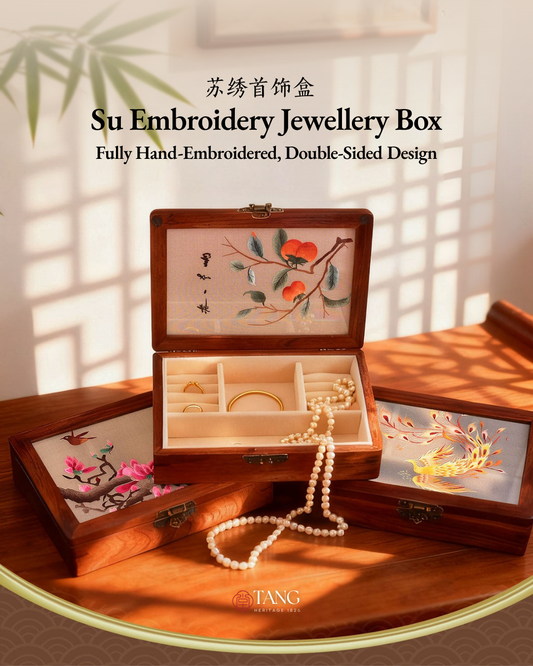
Su Embroidery Jewellery Box Ornament
Regular price From $328.00 USDRegular priceUnit price per -
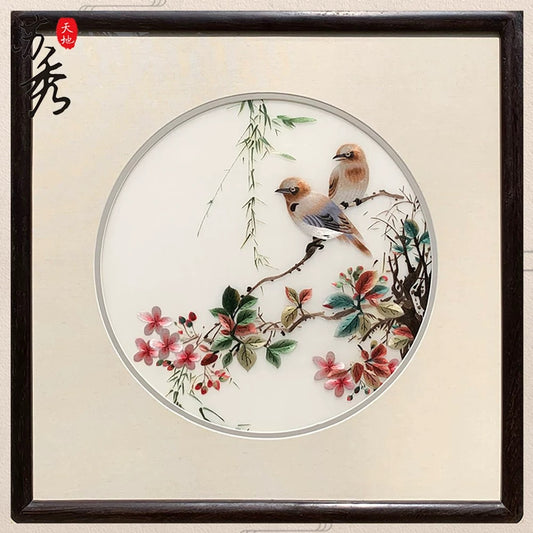
Su Embroidery Framed Wall Painting Art | Sparrows Among Autumn Blossom
Regular price From $508.00 USDRegular priceUnit price per -
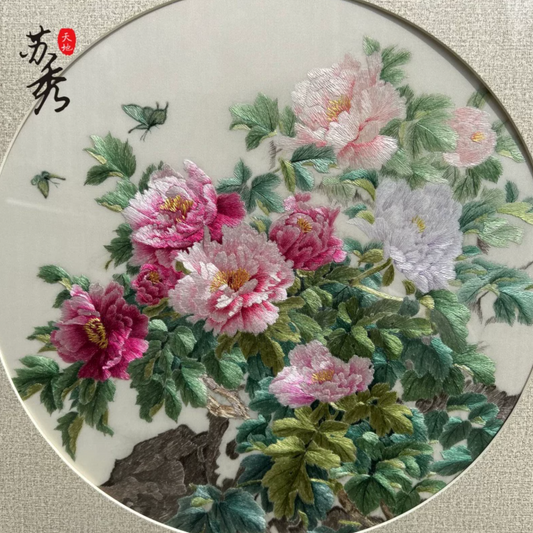
Su Embroidery Framed Wall Painting Art | Peonies of Sovereign Beauty
Regular price From $508.00 USDRegular priceUnit price per -
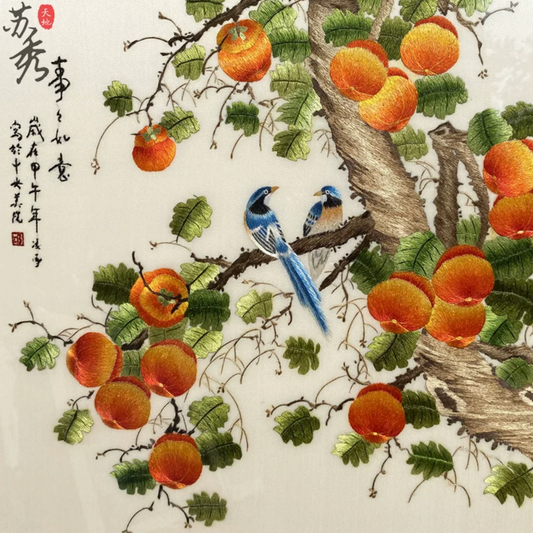
Su Embroidery Framed Wall Painting Art | Persimmon and Magpies, All Things as Wished
Regular price From $508.00 USDRegular priceUnit price per -
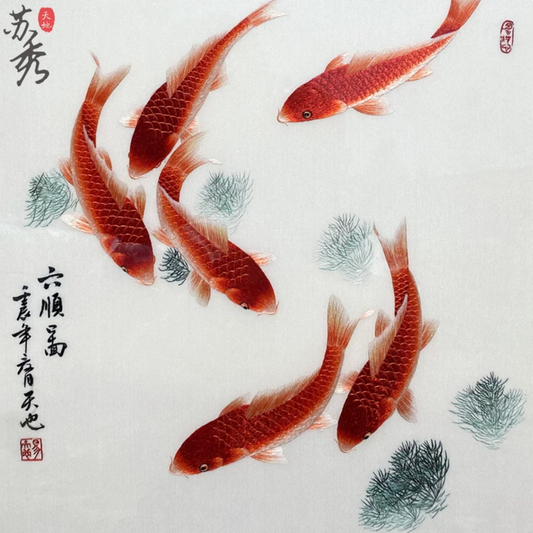
Su Embroidery Framed Wall Painting Art | Six Koi of Perpetual Abundance
Regular price From $508.00 USDRegular priceUnit price per -
Su Embroidery Framed Wall Painting Art | Tiger Portrait
Regular price From $508.00 USDRegular priceUnit price per -
Su Embroidery Framed Wall Painting Art | Nine Koi Beneath the Lotus
Regular price From $508.00 USDRegular priceUnit price per -
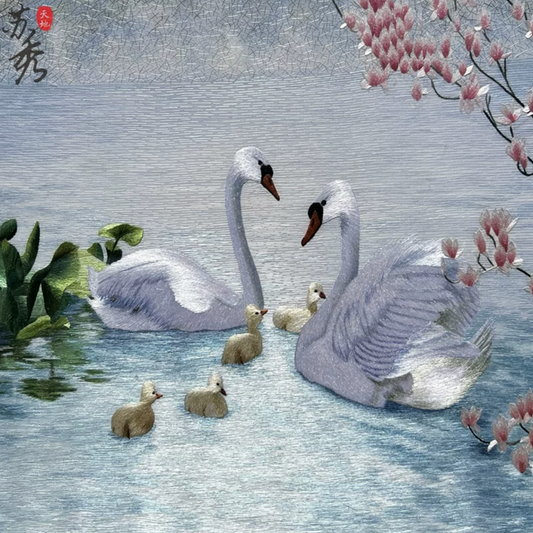
Su Embroidery Framed Wall Painting Art | Swans in Harmonious Union
Regular price From $508.00 USDRegular priceUnit price per -
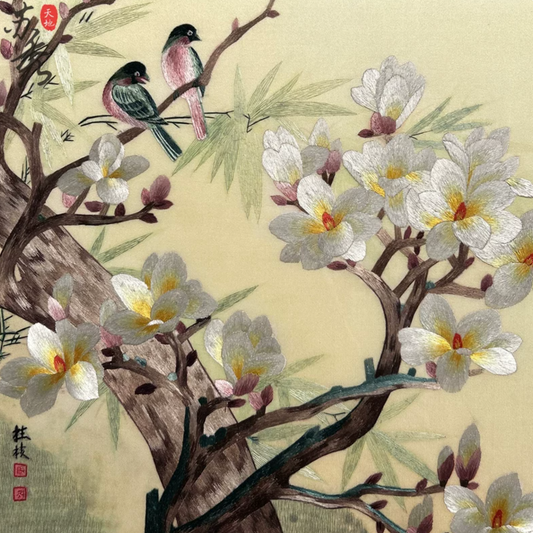
Su Embroidery Framed Wall Painting Art | Two Birds Among Magnolia Blossom
Regular price From $508.00 USDRegular priceUnit price per -
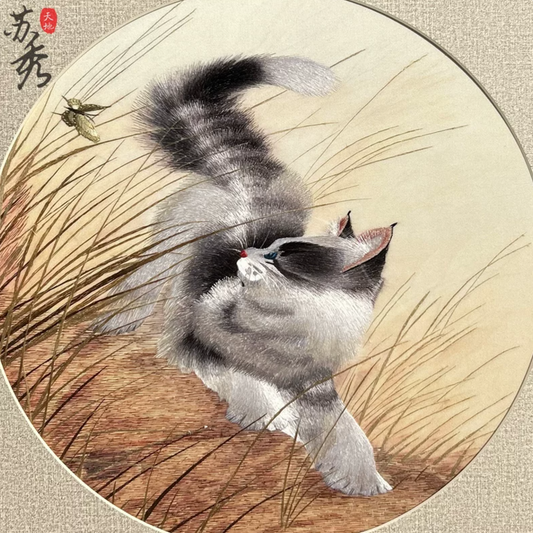
Su Embroidery Framed Wall Painting Art | Cat Among the Reeds
Regular price From $508.00 USDRegular priceUnit price per -
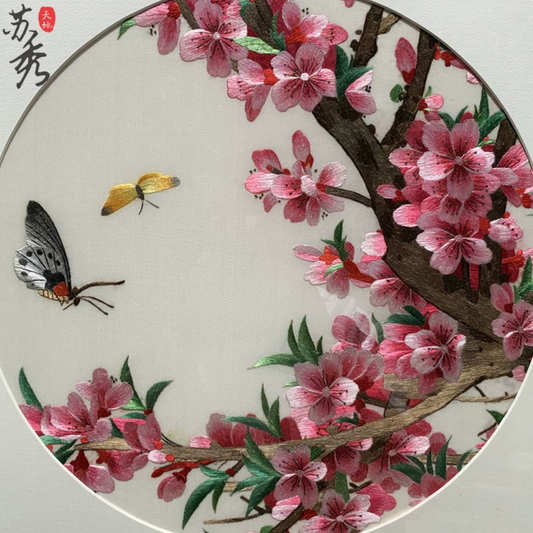
Su Embroidery Framed Wall Painting Art | Peach Blossom and Butterflies
Regular price From $508.00 USDRegular priceUnit price per -
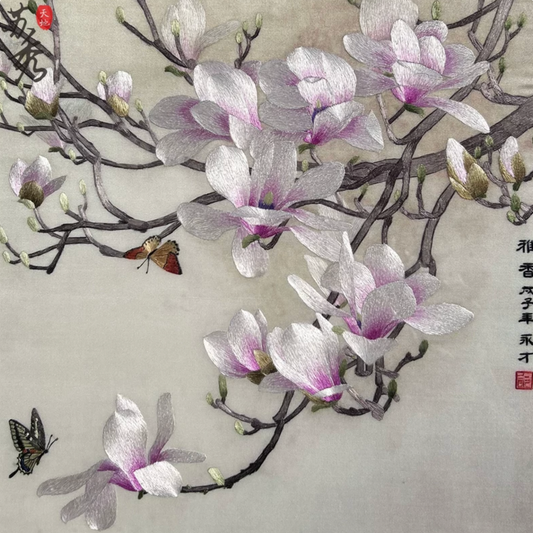
Su Embroidery Framed Wall Painting Art | Magnolia in Full Bloom
Regular price From $508.00 USDRegular priceUnit price per -
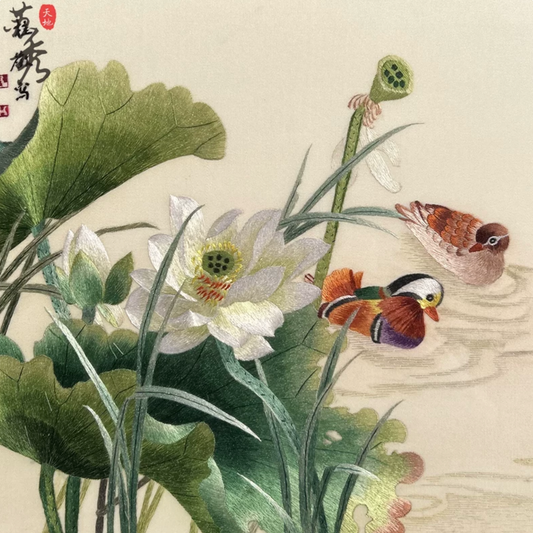
Su Embroidery Framed Wall Painting Art | Mandarin Ducks Among the Lotus
Regular price From $508.00 USDRegular priceUnit price per -
Su Embroidery Framed Wall Painting Art | Magnolia Under the Moon
Regular price From $508.00 USDRegular priceUnit price per

















The Artisans
A craft that cannot be pressed for volume
The artisans who made these pieces have spent decades acquiring what cannot be taught quickly. The splitting of silk thread. The rendering of water. The particular patience required to place ten thousand stitches in a 35-centimetre square and have each one matter. These are not skills that scale. They are skills that survive only in people who chose them, and who were fortunate enough to find a teacher who had chosen them before.
Tang Heritage does not pressure our artisans to meet demand. When a piece sells out, we wait for them to make more: on their schedule, at their pace, to their standard. This is why availability is limited.
To bring one of these pieces into your home is to become part of the reason this craft continues. That is not a romantic idea. It is a practical one. Craft survives because people choose it.
Lin
The Artisan's Daughter · Tang Heritage