The Empress wore the Phoenix Crown exactly three times in her life.
★★★★★ 4,000+ Verified 5-Star Reviews
Her coronation. Her visit to the Ancestral Temple. Her formal reception of ministers.
Three occasions. That was all.
In an entire lifetime as the most powerful woman in the most powerful empire on earth, the crown was reserved for the moments the empire agreed were truly worthy of it.
This bag carries the embroidery of that crown. Which means the question it quietly asks every day is the same one the empress answered three times in her life: is this moment worthy of what I carry?
The Phoenix Crown China Declared as National Treasure
The Nine Dragons and Nine Phoenixes Crown, worn by Empress Xiaoduan of the Ming Dynasty, is classified on China's First List of Cultural Relics Forbidden to be Exhibited Abroad. It has never left the National Museum of China. It never will.
The original crown cannot be owned, nor borrowed. It cannot cross a border. What can be owned is the tradition it represents: rendered in hand-stitched Suzhou embroidery, on genuine cowhide leather, produced in batches of fewer than twenty per month.
0
+
Hours of Hand Embroidery Per Bag
<
0
Bags Produced Per Month
1950
+
Years of Suzhou Embroidery Tradition
2,000 Year Old Suzhou Needle Technique Brought To Life
THE CRAFT
The embroidery on this bag is executed in the tradition of Suzhou embroidery (苏绣) — one of China's Four Great Embroideries, with over 2,000 years of continuous history.
It is inscribed as a National Intangible Cultural Heritage of China. It has been called "painting by needle" for centuries, and that description understates nothing.
Before a single stitch was placed on this bag, the design went through more than ten complete drafts. Every tendril in the scrollwork, every curve of the crown's silhouette, every intersection of the pattern was refined and re-refined until there was nothing left to improve. What you see is not the first version. It is the only version that was entirely right.
Three classical Suzhou needle techniques are used across the embroidery, each performing a specific function that no single stitch alone could achieve:
Double-Layer Satin Stitch
Application Stitch
Straight Satin Stitch
What It Means to Own This Bag
OWNERSHIP
This bag is not produced for volume. It is produced for the woman who will carry it as it was intended, with knowledge of what it means, and the quiet confidence that comes from carrying something most people will never fully understand.
Fewer than twenty are made per month. Each one is hand-embroidered, individually inspected, and logged with a unique serial number before it leaves the workshop. No two are identical. When a design is retired, it is retired permanently. There is no restock. There is no second run.
Every Tang Heritage piece comes with a metal authenticity card engraved with a unique serial number, logged in our permanent records and verifiable directly with us at any time. The bag you receive is the bag that was made for you, specifically, by a person who spent more than forty hours making it.
Join Over 4,000+ Happy Customers—Experience the Art of Handmade Luxury
I fell in love with this bag the moment I saw the embroidery. The champagne gold and milk white combination is so elegant! I also absolutely love how I can carry this in many ways, such as strapping it on my shoulders or wearing it as a backpack.
Bernice, T.
Tang Red 22
Embroidered Phoenix Crown
I am so amazed that there are four different ways to carry this bag! A luxurious, yet versatile backpack that matches any outfit at all.
Brenda, L.
Tang Red 22
Embroidered Phoenix Crown
Didn’t expect to love this as much as I do...the embroidery has this subtle depth that makes it feel almost alive in person. I’ve worn it in different ways and it just works every time! Surprisingly easy to reach for daily.
Tang Heritage's Limited Time Sale to Commemorate Crossing 4,000 Reviews!
Celebrate with us—order now to claim:
1. $250 OFF Tang Red 22 Embroidered Phoenix Crown Backpack (Save 45%) + 30-Days Heritage Refund Guarantee
2. Gold Metal Authenticity Card
3. Engraved Serial Number
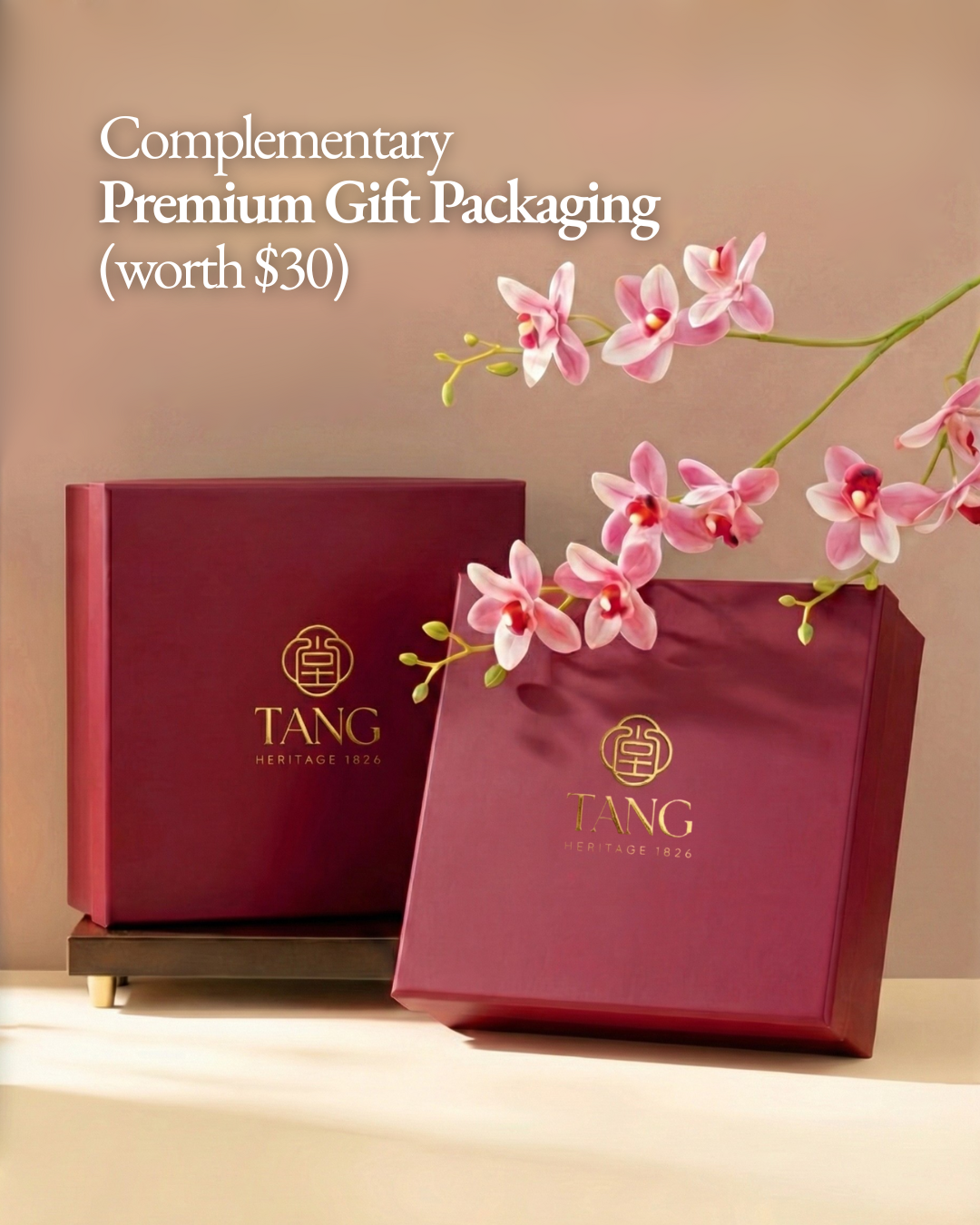
4. Premium Gift Packing (Worth USD$30)
In the imperial courts of China, the phoenix crown —fèngguān— was the most sacred adornment a woman could wear. Reserved for empresses and noblewomen at the highest ceremonies, it was not merely ornament. It was a declaration: of sovereignty, of grace, of a femininity so powerful it needed no words.
This bag carries that declaration forward.
The Tang Heritage Liuli Phoenix Crown Backpack draws its design directly from theLiuli phoenix crown(琉璃凤冠): the most ornate form of this imperial headdress, distinguished by its cloisonné enamel inlay, cascading pearl tassels, and silver phoenixes standing sentinel on either side. The flowing scrollwork embroidered across this bag is not abstract decoration. It is the crown's silhouette, translated stitch by stitch into Suzhou silk thread, worn on your back.
The Embroidery
The embroidery on this bag is executed in the tradition ofSuzhou embroidery(苏绣): one of China's Four Great Embroideries, with over 2,000 years of continuous craft history. This is not machine-assisted. Every curl, every tendril, every gold scroll is placed by hand using three classical needle techniques:
双套针 (Double-layer satin stitch)— builds dimension and depth, so the embroidery rises from the surface rather than lying flat
施针 (Application stitch)— used for shading and gradation, giving the gold thread its inner warmth
齐针 (Straight satin stitch)— the foundation, creating the dense, mirror-smooth sections that catch and bend light
The design itself went through more than ten drafts before a single stitch was placed. What you see is the result of months of refinement;not a first attempt, but a perfected one. Minor thread variations between pieces are not flaws. They are the signature of a hand that was present.
The Hardware
The drawstring cinch is anchored by a pale rose-gold octagonal medallion clasp engraved with the Tang Heritage signature character; three-dimensional, weighty, and precisely finished. It operates smoothly, opens cleanly, and closes with the quiet authority of hardware that was designed, not added. The eyelets are set flush into the leather; the drawstring cord is clean white leather. Nothing on this bag is decorative without also being functional.
Structure— Main bag + included inner pouch / mini wallet (varies by colourway)
Inner Pouch— 19.5 cm (L) × 7 cm (W) × 18 cm (H) · Suede-finish drawstring insert
Material
We chose premium cowhide leather for its structure, durability, and quiet refinement. The Liuli Phoenix Crown motif was hand-embroidered using fine, high-density threads to achieve depth and clarity in every detail.
Traditional Suzhou embroidery techniques were also adopted to create a layered and precise finish, bringing the design to life. Finished with durable light-gold hardware that complements the softness of the form. Lastly, this bag comes with a soft inner pouch lining, designed to protect and organise what you carry.
Available Colors
Ivory White — paired with a complimentary standalone cosmetic pouch
Silver — paired with a complimentary fortune mini wallet
The Liuli Phoenix Crown Backpack is produced in small batches. Each piece is inspected before it leaves the workshop. When a design is gone, it does not return.
Every Tang Heritage piece comes with ametal authenticity cardand a uniqueengraved serial numberlogged in our records, verifiable directly with us at any time.
Preorder note: All orders placed from 8 May 2025 will be shipped out on 24 May 2025. Thank you for your kind patience!
Every motif on this bag carries a lineage. For those who wish to know what they carry, the story is here, in full.
What Is The Chinese Phoenix (凤凰)?
The phoenix most know from Western mythology, the bird of fire that burns itself to ashes and rises again, is Greek. The Chinese Fenghuang (凤凰) is entirely different. Traced back over three thousand years to the Zhou Dynasty, it does not burn or destroy. In its earliest form, it was two birds: Feng (male) and Huang (female), whose union embodied the perfect balance of yin and yang. As mythology evolved, they merged into a single figure, understood as feminine: the celestial counterpart to the dragon, symbol of the empress, embodiment of grace and virtue.
What distinguishes the Fenghuang is its philosophical character. Classical texts describe it as a bird that appears only in times of righteousness, arriving when the world deserves it. Its presence was divine endorsement; its absence, a warning. The Fenghuang assessed power rather than serving it. Ancient artists portrayed it as a cosmological map: head = heavens, eyes = sun, back = moon, wings = wind, feet = earth, tail = planets. It was doctrine given form.
When this motif appears on a bag, it arrives carrying three thousand years of meaning: feminine sovereignty, cosmic balance, moral presence; and extends those to the woman who carries it.
The phoenix most know from Western mythology, the bird of fire that burns itself to ashes and rises again, is Greek. The Chinese Fenghuang (凤凰) is entirely different. Traced back over three thousand years to the Zhou Dynasty, it does not burn or destroy. In its earliest form, it was two birds: Feng (male) and Huang (female), whose union embodied the perfect balance of yin and yang. As mythology evolved, they merged into a single figure, understood as feminine: the celestial counterpart to the dragon, symbol of the empress, embodiment of grace and virtue.
What distinguishes the Fenghuang is its philosophical character. Classical texts describe it as a bird that appears only in times of righteousness, arriving when the world deserves it. Its presence was divine endorsement; its absence, a warning. The Fenghuang assessed power rather than serving it. Ancient artists portrayed it as a cosmological map: head = heavens, eyes = sun, back = moon, wings = wind, feet = earth, tail = planets. It was doctrine given form.
When this motif appears on a bag, it arrives carrying three thousand years of meaning: feminine sovereignty, cosmic balance, moral presence; and extends those to the woman who carries it.
What Is The Phoenix Crown (凤冠)?
In imperial China, what a woman wore on her head was governed by law. The fengguan (凤冠) — the phoenix crown — was a codified system of rank that ran from empress down through every degree of consort, princess, and court lady. An empress bore twelve dragons and nine phoenixes. A crown princess wore nine and four. Imperial consorts of various grades descended in careful gradations. To wear a crown above one's station was not fashion. It was a criminal act.
The phoenix crown of Ming Empress Xiaoduanxian, now in the National Museum of China, stands forty-eight centimetres tall and weighs over two kilograms. It is set with 5,449 pearls, 71 rubies, and 57 sapphires on a gold filigree framework. It was worn only three times: the ceremony of receiving her title, visits to the Ancestral Temple, and the reception of ministers. Its weight was reserved for moments that warranted it.
The cascading pearl tassels moved with every step, catching light and drawing every eye before the wearer spoke. This was authority expressed not through volume, but through presence. It is this very specific kind of authority: earned, ornate without carelessness; that the Liuli Phoenix Crown Backpack carries forward.
In imperial China, what a woman wore on her head was governed by law. The fengguan (凤冠) — the phoenix crown — was a codified system of rank that ran from empress down through every degree of consort, princess, and court lady. An empress bore twelve dragons and nine phoenixes. A crown princess wore nine and four. Imperial consorts of various grades descended in careful gradations. To wear a crown above one's station was not fashion. It was a criminal act.
The phoenix crown of Ming Empress Xiaoduanxian, now in the National Museum of China, stands forty-eight centimetres tall and weighs over two kilograms. It is set with 5,449 pearls, 71 rubies, and 57 sapphires on a gold filigree framework. It was worn only three times: the ceremony of receiving her title, visits to the Ancestral Temple, and the reception of ministers. Its weight was reserved for moments that warranted it.
The cascading pearl tassels moved with every step, catching light and drawing every eye before the wearer spoke. This was authority expressed not through volume, but through presence. It is this very specific kind of authority: earned, ornate without carelessness; that the Liuli Phoenix Crown Backpack carries forward.
The Liuli Lineage of Phoenix Crown
Before the Liuli phoenix crown took its present form, there was an older tradition that produced a colour no enamel or dye could match. The art was diancui (点翠) — "dotting with kingfishers." For over two thousand years, craftspeople cut iridescent kingfisher feathers with extraordinary precision and adhered them to gilt frameworks, producing a blue-green sheen that seemed to breathe with the light. Unlike pigment, kingfisher feathers refract light structurally: the same physics that makes morpho butterfly wings glow. The colour could not be manufactured. It could only be captured.
By the Ming and Qing dynasties, diancui had reached its zenith. The Qing Imperial Household Department established a dedicated Fur and Feather Treasury. Three master artisans were employed exclusively as Kingfisher Artisans, their lives devoted to creating featherwork for the emperor and court. The finest pieces used feathers from Cambodia, whose kingfishers produced the most intense iridescence. Some historians suggest this trade was substantial enough to have contributed to the wealth of the Khmer Empire that built Angkor Wat.
The last dedicated kingfisher feather workshop closed in 1933. In its place came the Liuli tradition, glass enamel and cloisonné, preserving the same architectural forms, cascading silhouettes, and jewelled surfaces, rendered now in materials that endure without ethical compromise. When the gold embroidery on this bag is traced back to its source, it traces through two thousand years of the most rarefied craft tradition in Chinese history.
Before the Liuli phoenix crown took its present form, there was an older tradition that produced a colour no enamel or dye could match. The art was diancui (点翠) — "dotting with kingfishers." For over two thousand years, craftspeople cut iridescent kingfisher feathers with extraordinary precision and adhered them to gilt frameworks, producing a blue-green sheen that seemed to breathe with the light. Unlike pigment, kingfisher feathers refract light structurally: the same physics that makes morpho butterfly wings glow. The colour could not be manufactured. It could only be captured.
By the Ming and Qing dynasties, diancui had reached its zenith. The Qing Imperial Household Department established a dedicated Fur and Feather Treasury. Three master artisans were employed exclusively as Kingfisher Artisans, their lives devoted to creating featherwork for the emperor and court. The finest pieces used feathers from Cambodia, whose kingfishers produced the most intense iridescence. Some historians suggest this trade was substantial enough to have contributed to the wealth of the Khmer Empire that built Angkor Wat.
The last dedicated kingfisher feather workshop closed in 1933. In its place came the Liuli tradition, glass enamel and cloisonné, preserving the same architectural forms, cascading silhouettes, and jewelled surfaces, rendered now in materials that endure without ethical compromise. When the gold embroidery on this bag is traced back to its source, it traces through two thousand years of the most rarefied craft tradition in Chinese history.
The Hidden Meaning in the Motif
There is something concealed in this embroidery, placed deliberately. In Mandarin Chinese, the word for pineapple is fènglí (凤梨). The first character — 凤 — is the same character that begins fènghuáng (凤凰, phoenix) and fèngguān (凤冠, phoenix crown). The pineapple's spreading crown of leaves was understood historically to mirror the phoenix's plumage: both things rising, both expressing regal abundance.
In the Hokkien dialect across southern China, Taiwan, Singapore, and Malaysia, pineapple is pronounced ong lai (旺来): a homophone for "prosperity arriving." The pineapple rolling ritual, performed when entering a new home, involves rolling the fruit through the front door while calling out blessings in Hokkien; an invitation for fortune to cross the threshold. Pineapples appear on Lunar New Year altars, in betrothal gifts, at business openings, at births. The fruit actively summons good luck.
The embroidery on this bag holds both meanings at once. The scrolling composition traces the fengguan's silhouette, but those same tendrils echo a pineapple's crown of leaves. Two separate things occupying the same space, both entirely present. Royal authority and prosperity. Imperial sovereignty and an open door: rendered in the same gold thread, without announcement. The most meaningful things do not advertise themselves. They wait to be found.
There is something concealed in this embroidery, placed deliberately. In Mandarin Chinese, the word for pineapple is fènglí (凤梨). The first character — 凤 — is the same character that begins fènghuáng (凤凰, phoenix) and fèngguān (凤冠, phoenix crown). The pineapple's spreading crown of leaves was understood historically to mirror the phoenix's plumage: both things rising, both expressing regal abundance.
In the Hokkien dialect across southern China, Taiwan, Singapore, and Malaysia, pineapple is pronounced ong lai (旺来): a homophone for "prosperity arriving." The pineapple rolling ritual, performed when entering a new home, involves rolling the fruit through the front door while calling out blessings in Hokkien; an invitation for fortune to cross the threshold. Pineapples appear on Lunar New Year altars, in betrothal gifts, at business openings, at births. The fruit actively summons good luck.
The embroidery on this bag holds both meanings at once. The scrolling composition traces the fengguan's silhouette, but those same tendrils echo a pineapple's crown of leaves. Two separate things occupying the same space, both entirely present. Royal authority and prosperity. Imperial sovereignty and an open door: rendered in the same gold thread, without announcement. The most meaningful things do not advertise themselves. They wait to be found.
What Is Suzhou Embroidery (苏绣)?
Suzhou embroidery (苏绣) is one of China's Four Great Embroideries, and the most celebrated for its precision and delicacy. It originated in the Suzhou region over two millennia ago, refined through the Song, Ming, and Qing dynasties into a craft that could render a fish scale in silk, a strand of hair in thread, a shadow falling across water.
What distinguishes Suzhou embroidery from other traditions is its control of depth. A skilled Suzhou artisan does not embroider onto a surface, she builds one. Layers of thread are placed with calculated sequence so that the finished work reads dimensionally: some areas catching light, others retreating into shadow, the whole composition appearing to breathe.
That is what you see on this bag. The gold scrollwork is not flat. It rises. In certain light, it glows from within. That is not a quality of the thread alone, it is the result of technique accumulated over a lifetime, applied stitch by stitch.
Suzhou embroidery (苏绣) is one of China's Four Great Embroideries, and the most celebrated for its precision and delicacy. It originated in the Suzhou region over two millennia ago, refined through the Song, Ming, and Qing dynasties into a craft that could render a fish scale in silk, a strand of hair in thread, a shadow falling across water.
What distinguishes Suzhou embroidery from other traditions is its control of depth. A skilled Suzhou artisan does not embroider onto a surface, she builds one. Layers of thread are placed with calculated sequence so that the finished work reads dimensionally: some areas catching light, others retreating into shadow, the whole composition appearing to breathe.
That is what you see on this bag. The gold scrollwork is not flat. It rises. In certain light, it glows from within. That is not a quality of the thread alone, it is the result of technique accumulated over a lifetime, applied stitch by stitch.
The Three Needle Techniques
The phoenix crown embroidery on this bag is constructed from three classical Suzhou stitches, each serving a specific function.
双套针 — Double-layer satin stitch. Threads are laid in overlapping sets at calculated angles, building physical height and volume. The result is a motif that rises from the leather: sculptural, dimensional, casting subtle shadows in bright light.
施针 — Application stitch, used for shading. Where the gold moves from bright to warm to amber, this stitch creates the transition. The celebrated master Shen Shou used over one hundred shades to capture Renaissance light in silk. Without shī zhēn, the embroidery would read as flat gold. With it, the embroidery glows, as if lit from within.
齐针 — Straight satin stitch. Parallel threads laid with exacting uniformity, creating dense mirror-smooth passages where light gathers longest. These are the brightest points that catch your eye first across a room.
Together, these three stitches create an embroidery that changes with the light, rewards close looking, and reads entirely differently from a distance than in hand. It is, in the most literal sense, a small painting: built in thread, not pigment.
The phoenix crown embroidery on this bag is constructed from three classical Suzhou stitches, each serving a specific function.
双套针 — Double-layer satin stitch. Threads are laid in overlapping sets at calculated angles, building physical height and volume. The result is a motif that rises from the leather: sculptural, dimensional, casting subtle shadows in bright light.
施针 — Application stitch, used for shading. Where the gold moves from bright to warm to amber, this stitch creates the transition. The celebrated master Shen Shou used over one hundred shades to capture Renaissance light in silk. Without shī zhēn, the embroidery would read as flat gold. With it, the embroidery glows, as if lit from within.
齐针 — Straight satin stitch. Parallel threads laid with exacting uniformity, creating dense mirror-smooth passages where light gathers longest. These are the brightest points that catch your eye first across a room.
Together, these three stitches create an embroidery that changes with the light, rewards close looking, and reads entirely differently from a distance than in hand. It is, in the most literal sense, a small painting: built in thread, not pigment.
The Design Process: Ten Drafts to One
The embroidery pattern you see on this bag passed through more than ten complete design drafts before a single stitch touched leather. That number is not marketing. It is the actual count of how many times the design was revised, set aside, and begun again.
The challenge was not simply rendering the Liuli phoenix crown in thread. Any skilled embroiderer can translate a reference image into stitchwork. The challenge was translating the feeling of the crown — the way it spreads and rises, the way it carries centuries without appearing burdensome — into a composition that would work on a curved, flexible, daily-use surface. A composition that would work in motion, at varying distances, under shifting light.
Early drafts resolved the crown but lost the pineapple's form. Later versions recovered the double meaning but disrupted balance. Some read beautifully on paper but proved impractical at the bag's scale. Each was tested not only for visual fidelity but for what it would demand of the embroiderer's hands across forty hours of sustained work.
The final version navigates every constraint without showing effort. The double image resolves with such naturalness that most observers register one or the other, and only a few see both. The composition feels inevitable. It is not. It is the version that survived ten predecessors. It will not announce itself. It does not need to.
The embroidery pattern you see on this bag passed through more than ten complete design drafts before a single stitch touched leather. That number is not marketing. It is the actual count of how many times the design was revised, set aside, and begun again.
The challenge was not simply rendering the Liuli phoenix crown in thread. Any skilled embroiderer can translate a reference image into stitchwork. The challenge was translating the feeling of the crown — the way it spreads and rises, the way it carries centuries without appearing burdensome — into a composition that would work on a curved, flexible, daily-use surface. A composition that would work in motion, at varying distances, under shifting light.
Early drafts resolved the crown but lost the pineapple's form. Later versions recovered the double meaning but disrupted balance. Some read beautifully on paper but proved impractical at the bag's scale. Each was tested not only for visual fidelity but for what it would demand of the embroiderer's hands across forty hours of sustained work.
The final version navigates every constraint without showing effort. The double image resolves with such naturalness that most observers register one or the other, and only a few see both. The composition feels inevitable. It is not. It is the version that survived ten predecessors. It will not announce itself. It does not need to.
Preserving Cultural Heritage Through Fashion – A Legacy in Your Hands
In a world where fast fashion dominates, where trends come and go in the blink of an eye, something extraordinary happens when we choose to honor the past. True artistry—the kind that takes years to master, that is passed down through generations—is at risk of being lost. But with every Tang Heritage bag created, a centuries-old tradition is revived, protected, and carried forward into the future.
When you carry this bag, you carry a piece of history. You are not just supporting a luxury craft, you are playing a role in preserving an art form that has been cherished for over a thousand years. Every purchase fuels the work of artisans who have spent their lives perfecting these intricate techniques, allowing them to pass their knowledge on to future generations.
This is how fashion becomes more than just material goods. This is how heritage lives on: through the hands of those who wear it with pride.
Heritage Refund Policy: 30 Days of Confidence
At Tang Heritage, we stand by the quality and craftsmanship of our products with our Heritage Refund Policy. If there’s any issue with your order, you can contact us at cs@tangheritage.com within 30 days of receiving it, and we’ll make it right — no questions asked.
This iron-clad quality assurance guarantee has been part of our commitment to excellence since the very beginning, ensuring your peace of mind with every purchase. It’s also the reason our customers trust us and keep coming back year after year.
Experience the artistry of Tang Heritage risk-free, knowing that your satisfaction is always our top priority.
Found A Tang Heritage Bag Online But Unsure If It’s the Real Thing?
Many of our sold out designs have begun appearing on the secondary market. While we’re honored by the growing interest, we also understand your concerns. Fortunately, every genuine Tang Heritage bag comes with two key markers of authenticity:
✓ A metal authenticity card included with every original purchase
✓ An engraved serial number unique to each bag, logged in our internal records
If you’re unsure about a listing or a secondhand purchase, reach out to us directly. We’ll gladly verify the serial number for you—no matter where the bag was bought. Email us atcs@tangheritage.com for peace of mind.
Choosing a selection results in a full page refresh.